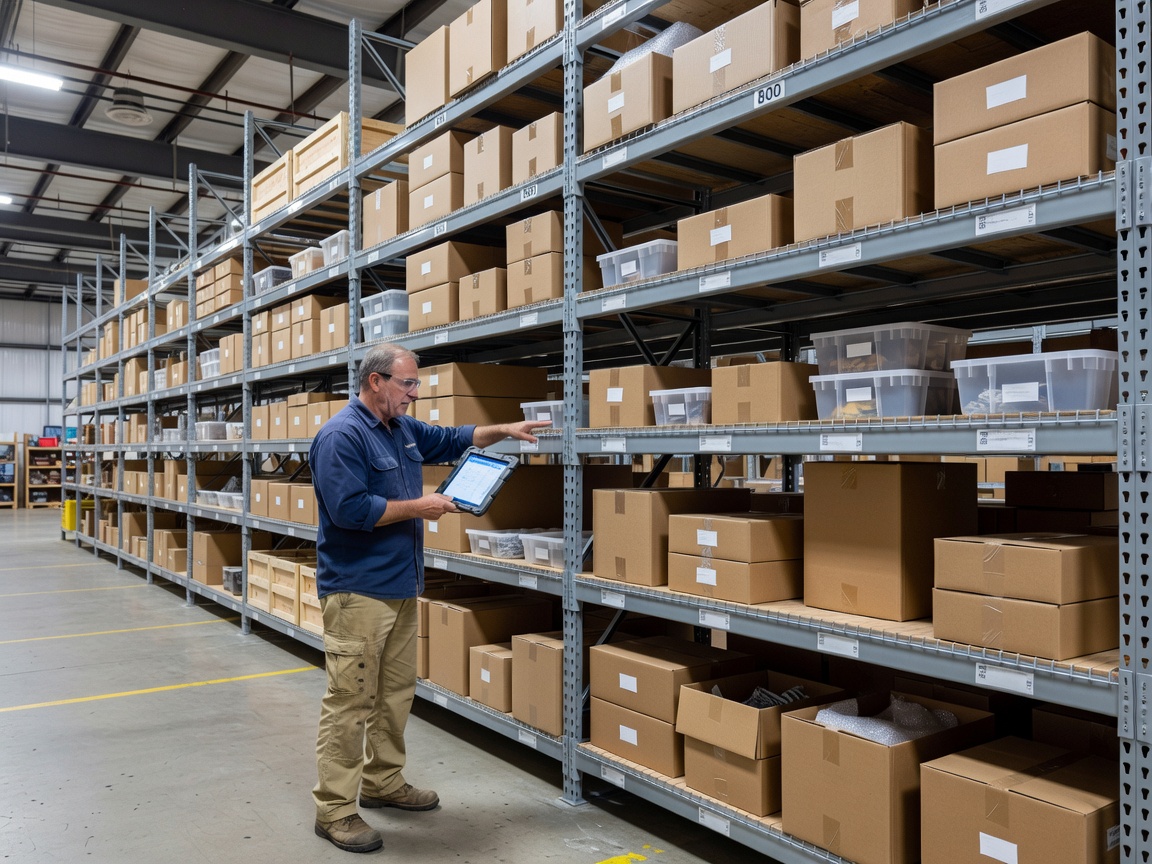
Training scope
Inventory accuracy is built through consistent records, controlled movement and timely investigation. This program follows stock from receipt and location through picking, adjustment and distribution.
It is relevant to inventory clerks, warehouse operatives, order fulfilment teams and coordinators responsible for stock visibility. The learning model can be adapted to manual or system-supported environments.
Key learning areas
- Stock records, identifiers, units and location discipline.
- Cycle checks and investigation of variances.
- Order fulfilment, allocation and dispatch handover.
- Discrepancy recording and escalation.
- Distribution planning and inventory visibility.
Operational examples
Scenarios may include an item recorded in the wrong unit, a short pick, duplicate location information or a stock adjustment without a clear reason. Learners map the evidence needed, identify the process break and communicate the status to the correct owner.
Practical considerations
Inventory systems, counting methods and approval controls vary. Product traceability, controlled goods and sector-specific records may have additional requirements. Employer procedures and applicable local rules must be checked before changing a record or process.
Advantages and limitations
The program builds a shared understanding of why small record errors affect planning and customer commitments. It does not audit a stock system, certify accuracy or authorise financial adjustments. Local permissions and supervisory controls remain essential.
Common training gaps
Common gaps include inconsistent units of measure, unexplained adjustments, delayed discrepancy reporting and weak handovers between picking and dispatch. Practical exercises should use anonymised local examples and current terminology.