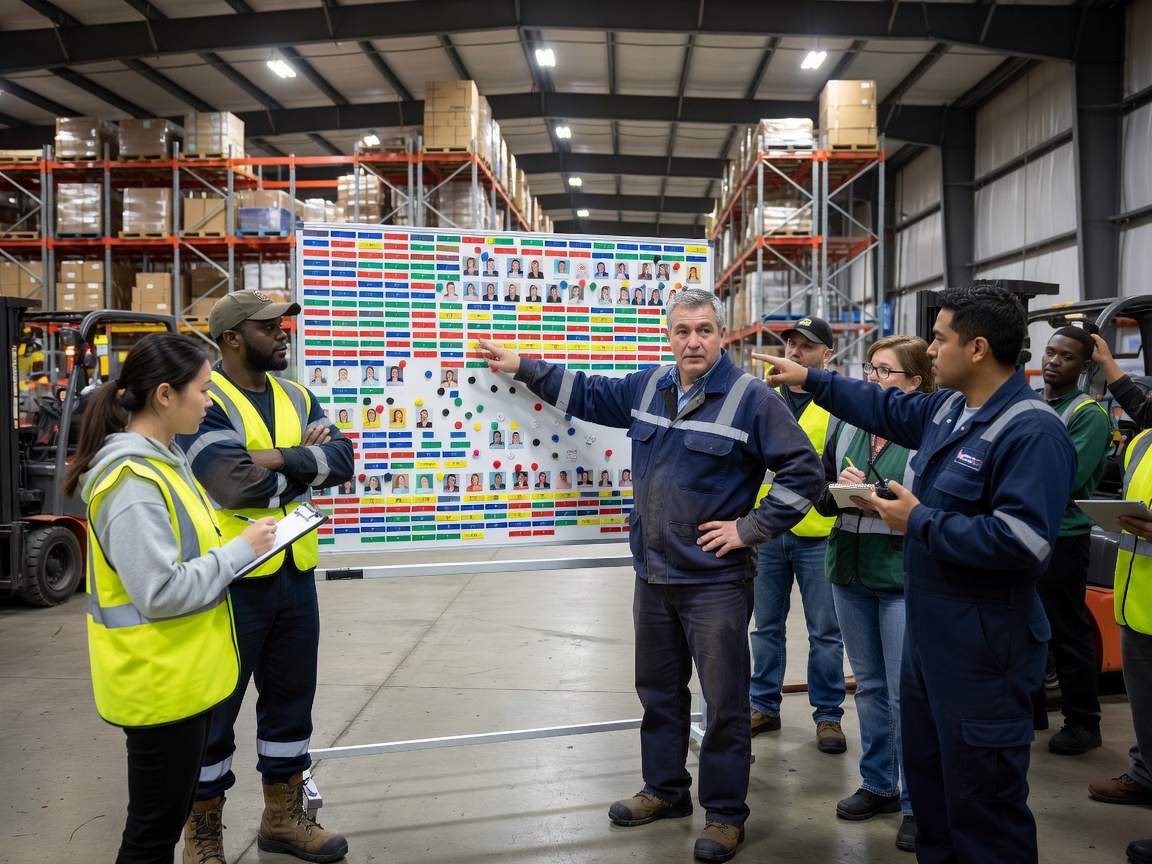
Purpose of the program
Supervisors translate plans into work. They allocate attention, identify constraints, support safe execution and communicate changes between teams. This program develops that operating discipline without presenting completion as a formal qualification.
It is suitable for team leaders, acting supervisors, experienced operators preparing for broader responsibility and coordinators working across warehouse or transport functions.
Development areas
- Shift organisation, priorities and visible work allocation.
- Workflow monitoring and early identification of constraints.
- Briefings, handovers and operational communication.
- Issue escalation, documentation and follow-through.
- Performance observation and continuous improvement.
Operational examples
Scenarios may involve an absent team member, a delayed inbound movement, a safety concern or an order priority change. Learners decide what requires immediate attention, what can be delegated and what evidence should be recorded for the next shift.
Practical considerations
Authority differs between employers. A supervisor may coordinate work without holding authority for employment decisions, equipment authorization or regulatory sign-off. Local policies, role descriptions and applicable requirements must define the boundaries.
Advantages and limitations
Structured observation and escalation habits make operational issues easier to see. The program cannot replace experience, local management systems or technical competence. It also does not promise promotion, employment outcomes or a legally recognised qualification.
Common development gaps
Common gaps include vague priorities, delayed escalation, inconsistent briefings and feedback based on impressions rather than observed work. A short shift record and specific follow-up owner can improve control.